Launch offer — valid today only

📄 Digital book in PDF · read it on your phone or print it

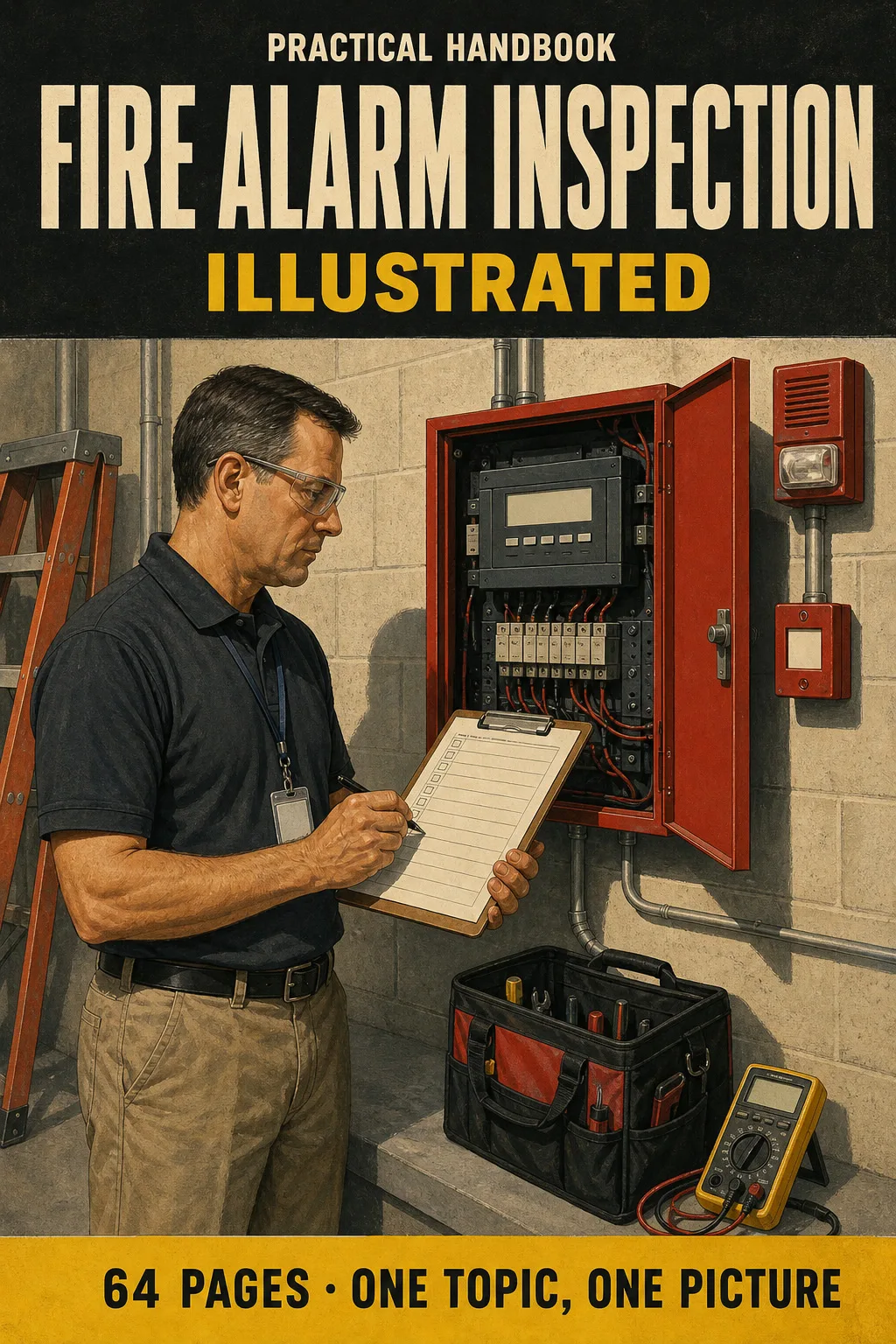
Fire Alarm Inspection and Testing, in Drawings Every Test in the Same Order, for the Job and the NICET Exam

Initiating devices, Class A and Class B circuits, ground faults, battery calculations, audibility, elevator recall, inspection intervals and reports. Every topic gets its own page: the drawing first, then what you need to remember. 64 illustrated pages.

START STUDYING THIS WAY

🔒 Secure checkout · PDF by email · 30-day guarantee

Every topic, its own pageEach test drawn as steps, with the explanation right beside it
64 illustrated pages8 parts, from the whole system in one block diagram to the one-page inspection checklist
Up-to-date sourcesNFPA 72 (current edition) and the current NICET outline for Inspection and Testing of Fire Alarm Systems
PDF by emailFormat

Look Inside the Book

Every page has one big drawing and a box with the steps and numbers you need to know:

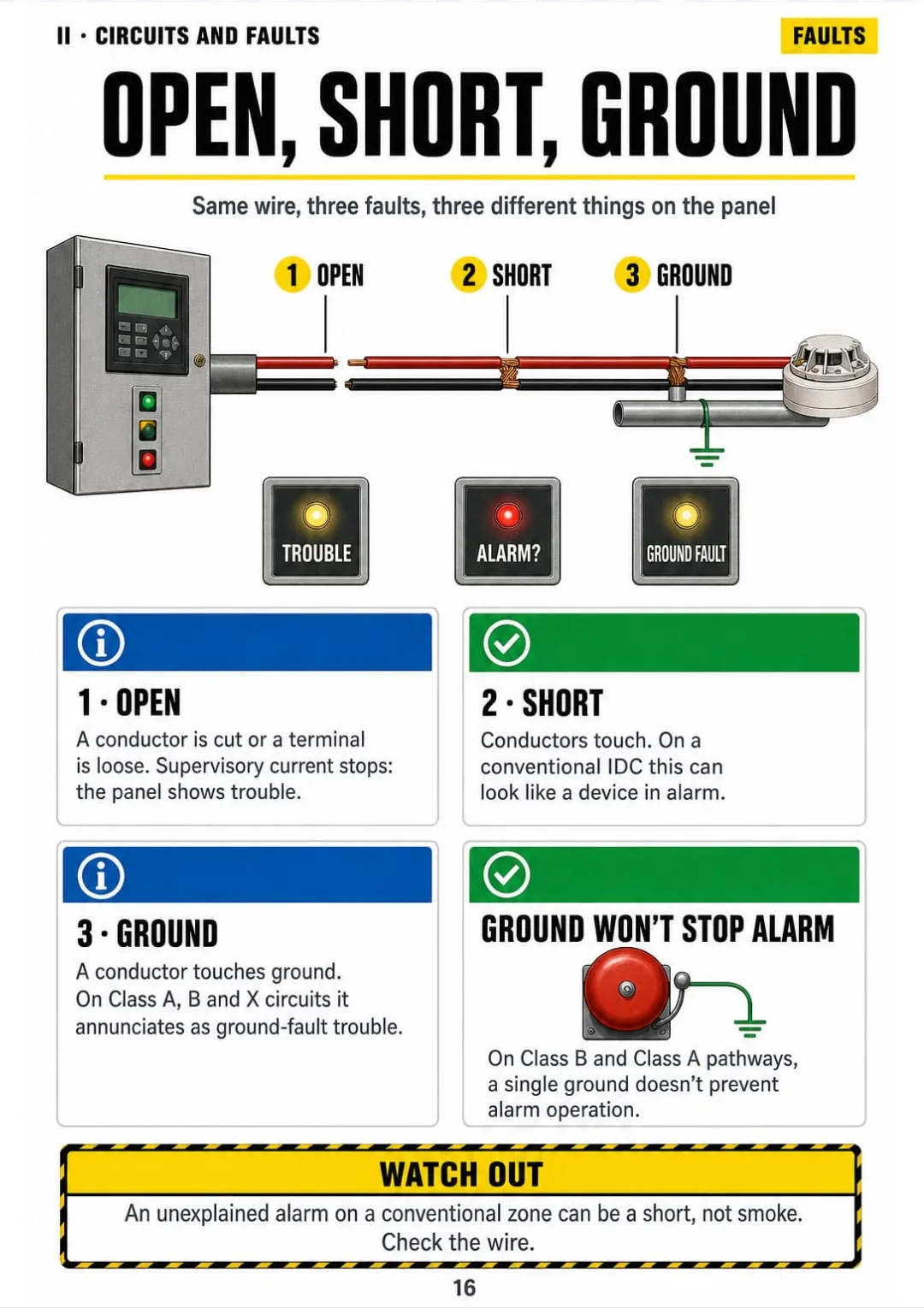
Open = trouble, short = can look like alarm, ground = ground-fault trouble.
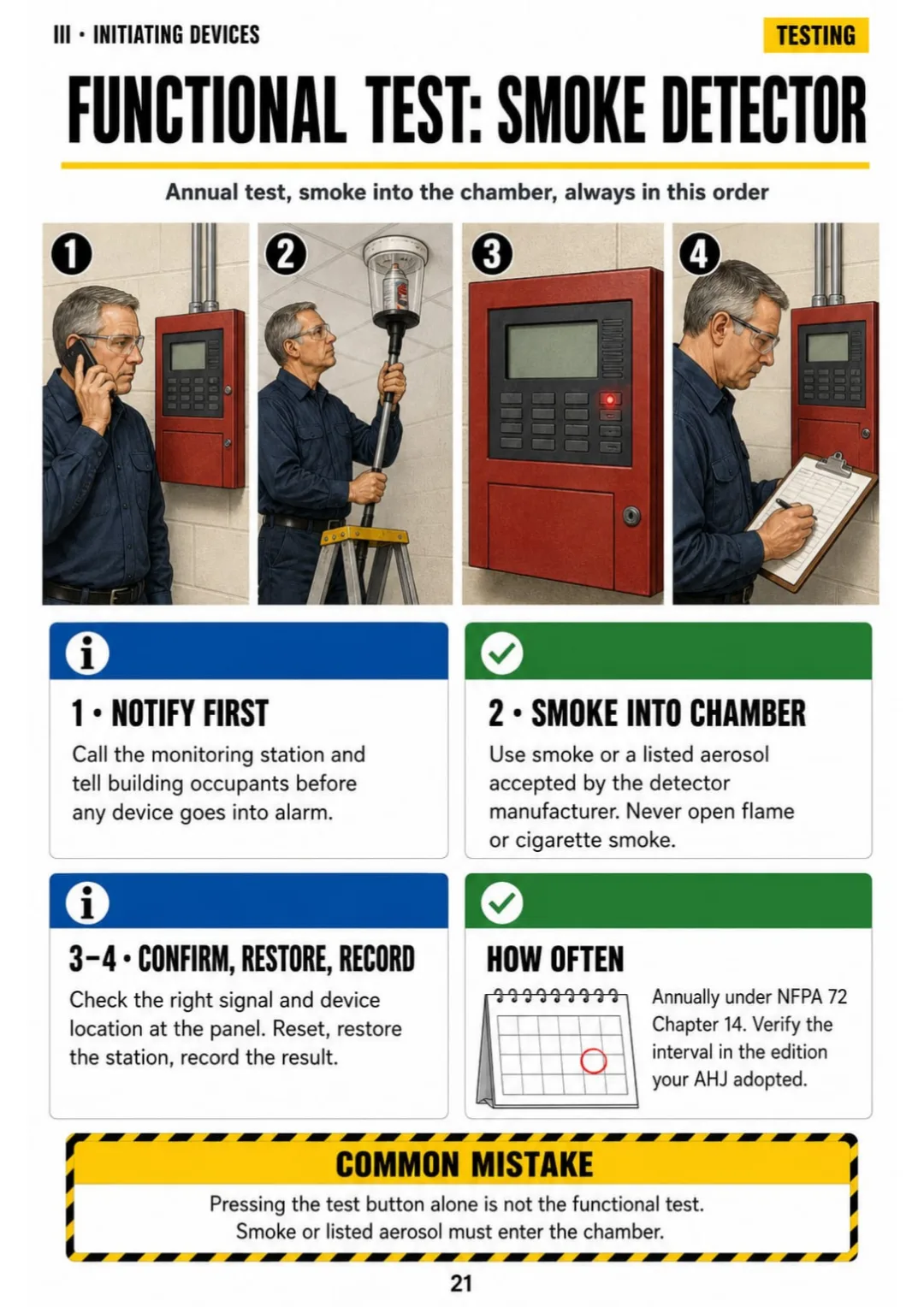
Annual functional test: smoke or listed aerosol into the chamber, test button alone doesn't count
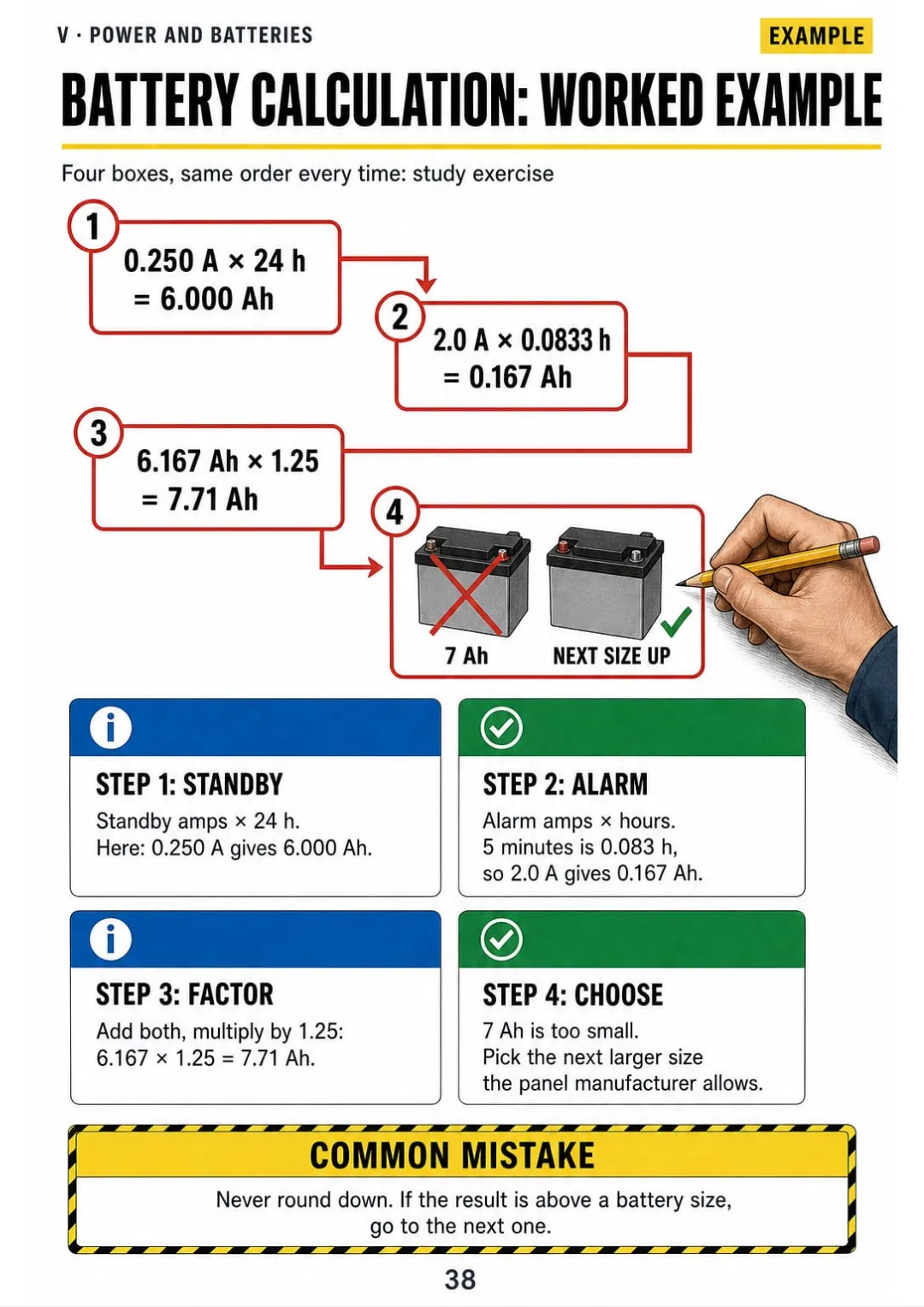
0.250 A standby + 2.0 A alarm → 7.71 Ah → next size above 7 Ah
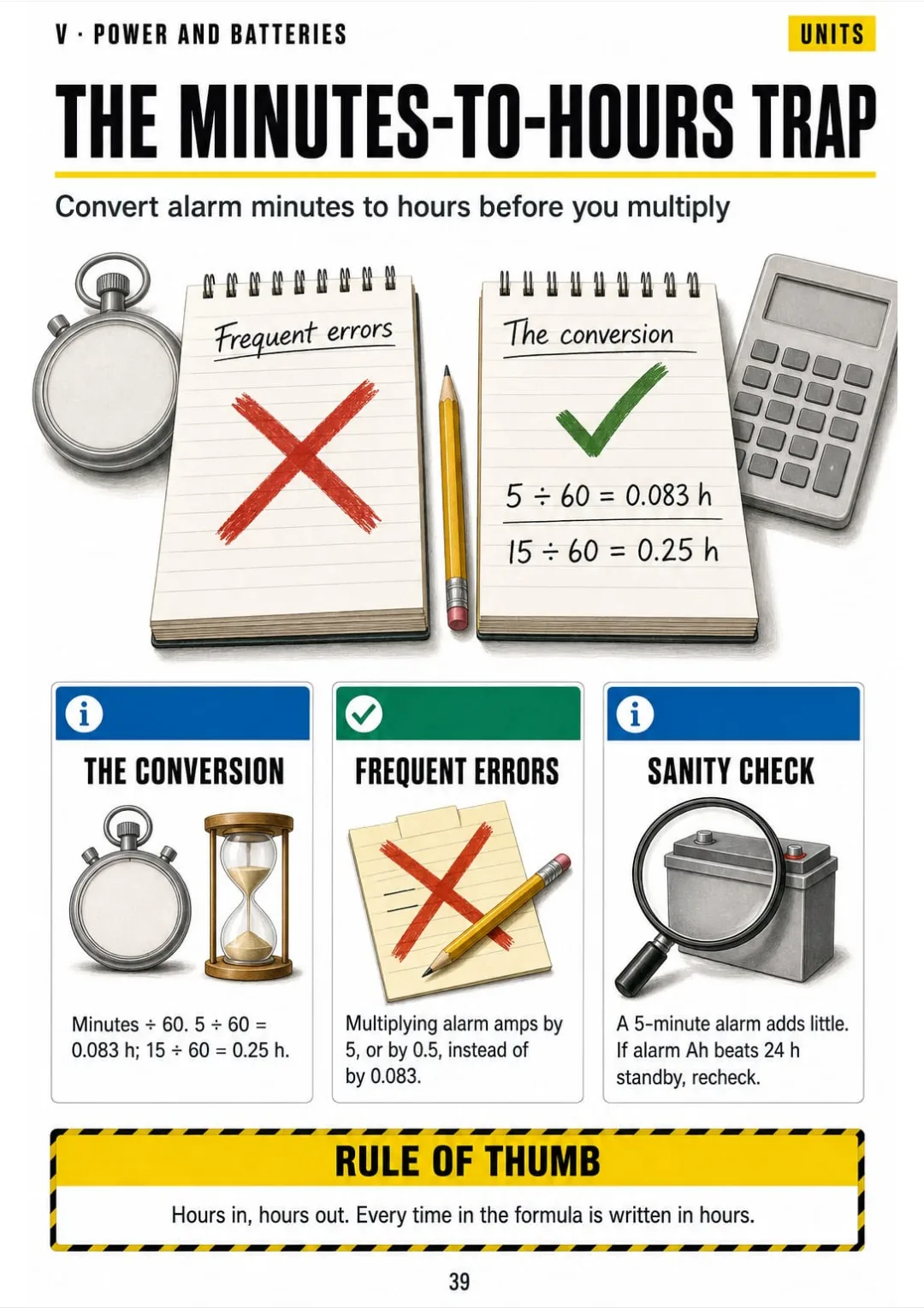
5 min = 0.083 h · 15 min = 0.25 h — convert before multiplying
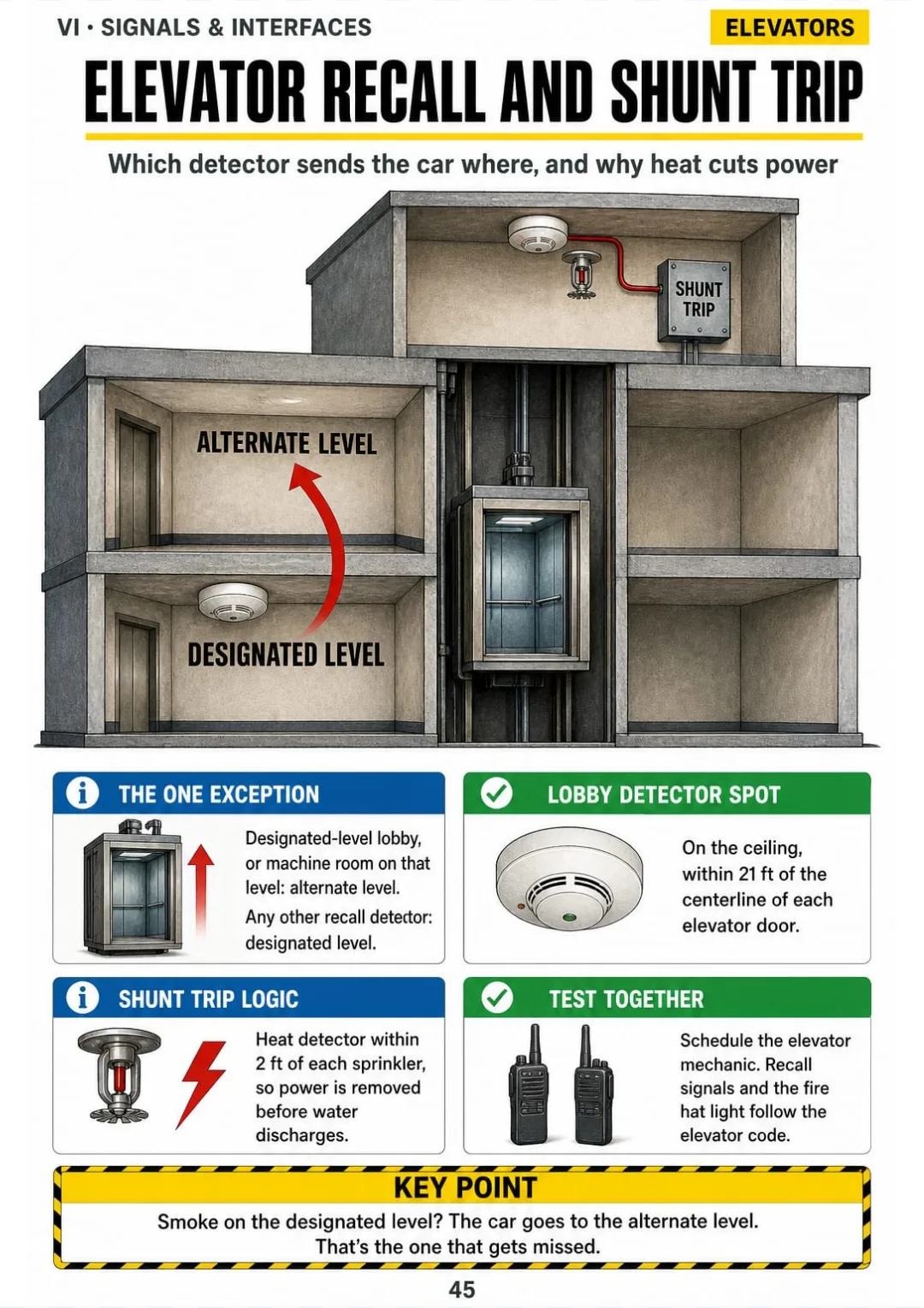
Designated-level lobby or machine room detector → alternate level; any other recall detector → designated level.
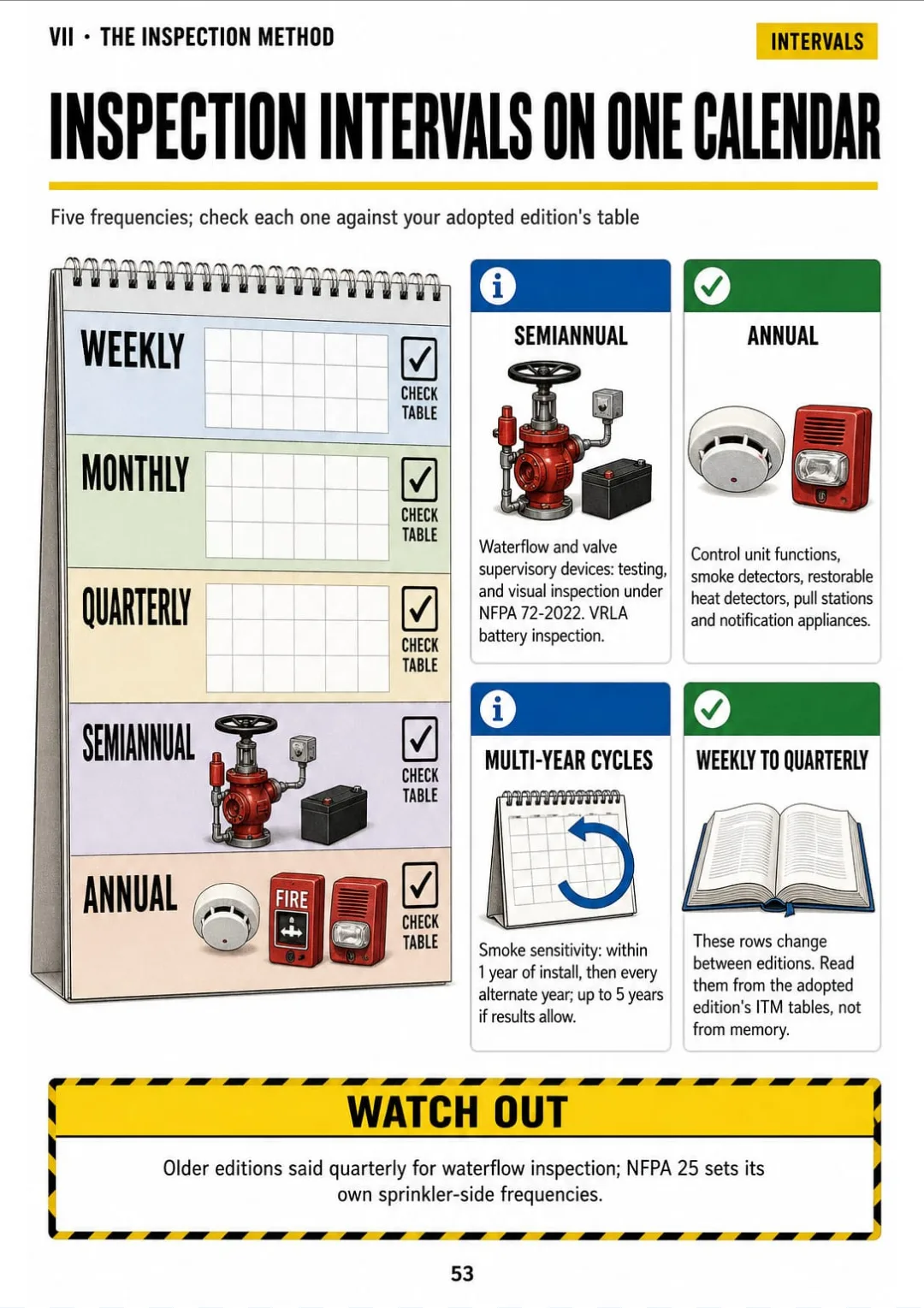
Weekly to annual on one calendar: semiannual waterflow, annual detectors and panel
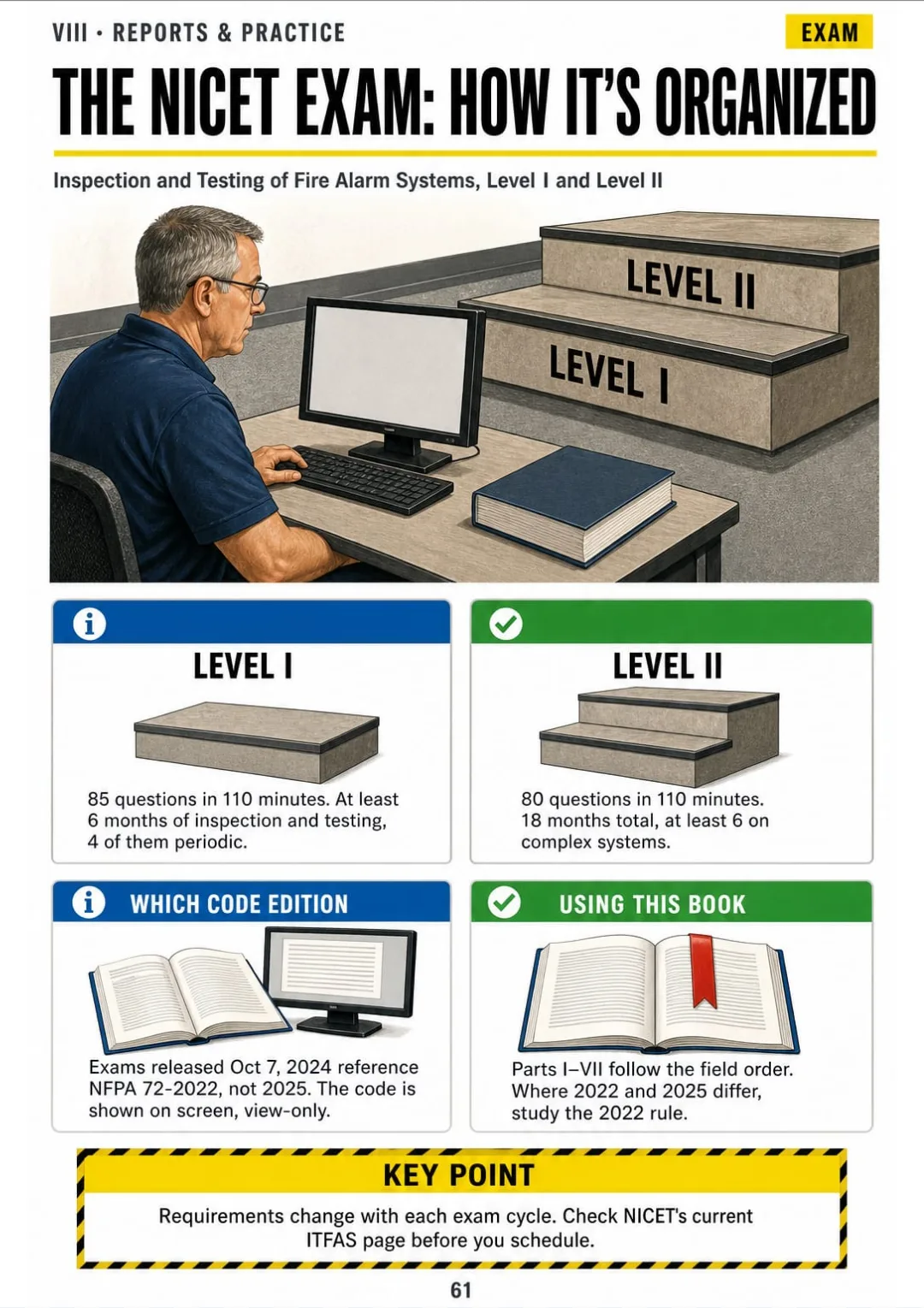
Level I: 85 questions, 110 minutes. Level II: 80 questions. Both reference NFPA 72-2022.
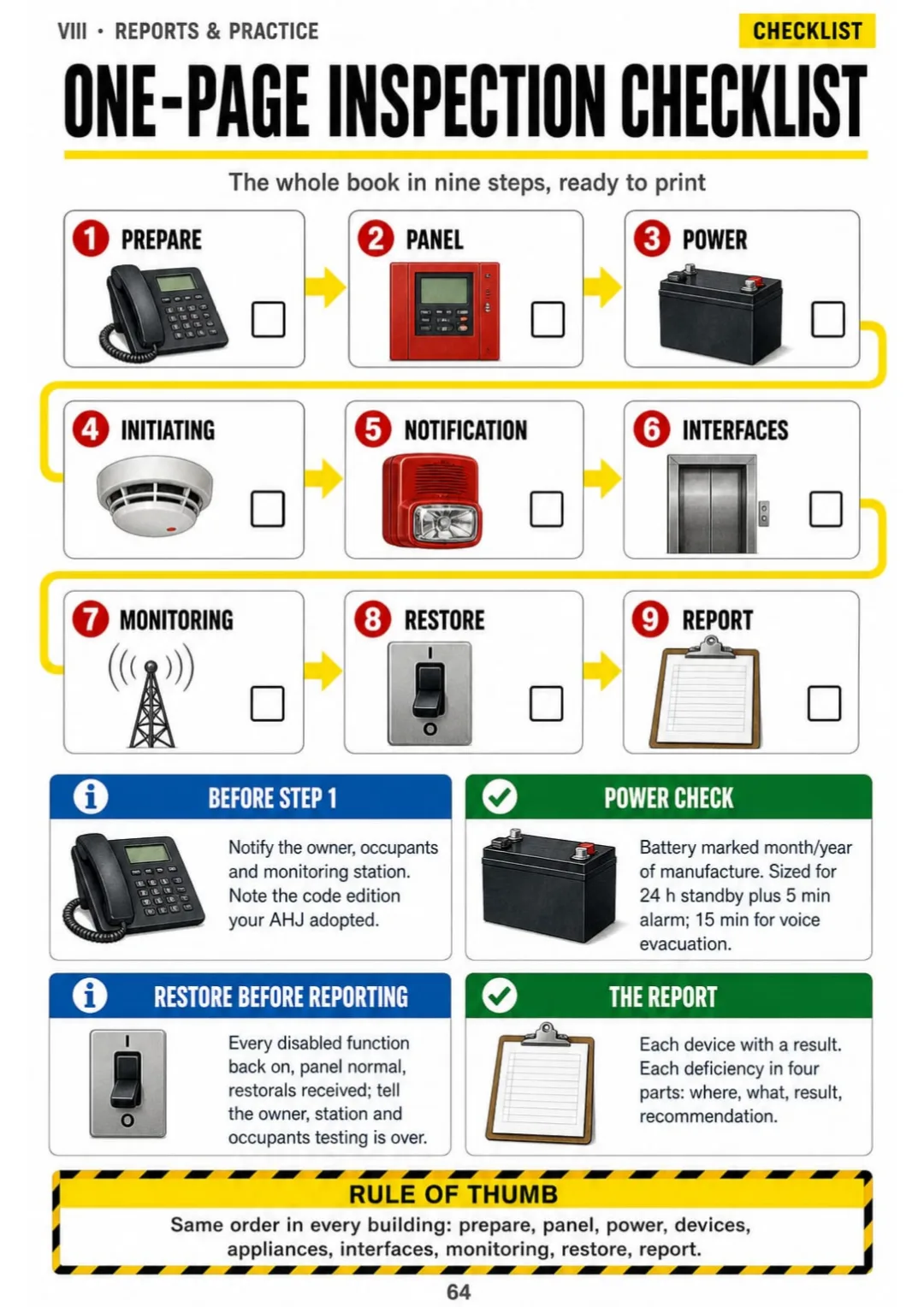
Nine steps in the same order, from prepare to report, on one printable page.

Swipe to see more →

These are real pages from the book. The table of contents is the full one: 8 parts and 60 topics.

The Problem Isn't You. It's How It Was Explained to You.

You're at the panel with the device list in hand, and the job sheet asks for a battery calculation. Standby current, alarm current, and an amp-hour number that has to hold up.

You've done it before, but it never comes out the same twice. The manual explains it in paragraphs: hours in one place, minutes in another, a margin somewhere in the middle. Nothing tells you what goes first.

0.250 A standby + 2.0 A alarm → 7.71 Ah → next size above 7 Ah

In the book, that same calculation is one page. A quarter amp for 24 hours of standby, two amps for five minutes of alarm, the minutes turned into hours, a 25% margin added, and the answer in a box: 7.71 Ah, so you go to the next size above 7 Ah.

The rest works the same way. Open, short and ground drawn on one wire. The smoke detector functional test in steps. Elevator recall with the car's two destinations. Every inspection interval on one calendar. Each one has its own page.

Next time the job sheet asks for the battery calc, you know the order and you work it out right there. No digging back through the code to find where you went wrong.

COMPARE FOR YOURSELF

The Same Topic, Two Ways to Study It

THIS
  • The manual: line after line after line
  • Detector tests explained only in words
  • The test button rule is buried mid-paragraph
Smoke detectors are tested at the interval set for initiating devices. The test puts smoke or an approved aerosol into the detector's chamber, following the manufacturer's instructions. The built-in test switch checks only part of the circuitry, so on its own it is not a full functional test. Once the detector activates, the technician confirms the signal at the panel, checks the address and resets the device before moving on to the next one.
FOR THIS
  • The smoke detector test in one drawing
  • The steps in one box
  • A box that says it: the test button alone doesn't count
Annual functional test: smoke or listed aerosol into the chamber, test button alone doesn't count
CONTENTS

Take a Look at the 8 Parts and 60 Topics

The system at a glance, circuits and faults, initiating devices, notification appliances, power and batteries, signals and interfaces, the inspection method, and reports with practice: 64 pages, all illustrated.

IThe System at a Glance · pp. 5-11
  1. The Whole System in One Block Diagram
  2. Conventional vs. Addressable Panels
  3. Initiating, Notification, Supervisory: Who Does What
  4. IDC, SLC and NAC: The Three Circuits
  5. Alarm, Supervisory and Trouble Side by Side
  6. Who's Who: Owner, AHJ, Contractor, Monitoring Station
  7. Reading the Code Without Getting Lost
IICircuits and Faults · pp. 12-19
  1. The End-of-Line Resistor: Why It's There
  2. Class B: One Path, No Backup
  3. Class A: The Loop That Comes Back
  4. Class X and the Other Pathway Classes
  5. Open, Short, Ground: Three Faults on One Wire
  6. Chasing a Ground Fault Step by Step
  7. Voltage Drop on a NAC
  8. Wiring Checks Before You Call It Good
IIIInitiating Devices · pp. 20-28
  1. Spot Smoke Detectors: Photoelectric vs. Ionization
  2. Functional Test of a Smoke Detector
  3. Smoke Detector Sensitivity Testing
  4. Heat Detectors: Fixed Temperature and Rate-of-Rise
  5. Testing Heat Detectors Without Destroying Them
  6. Duct Smoke Detectors
  7. Beam and Air-Sampling Detectors
  8. Manual Pull Stations
  9. Waterflow and Valve Supervisory Switches
IVNotification Appliances · pp. 29-34
  1. The Temporal-Three Pattern
  2. Audibility: Public Mode and Sleeping Areas
  3. Measuring Sound with a Meter
  4. Strobes: Candela, Flash Rate and Sync
  5. Speakers and Voice Evacuation
  6. Visual Inspection of Appliances
VPower and Batteries · pp. 35-41
  1. Primary and Secondary Power
  2. Standby and Alarm: The Two Loads
  3. Battery Calculation: The Formula
  4. Battery Calculation: A Worked Example
  5. The Minutes-to-Hours Trap
  6. Inspecting and Testing Batteries
  7. Power Supplies and NAC Extenders
VISignals, Monitoring and Interfaces · pp. 42-49
  1. From Panel to Monitoring Station
  2. DACT, Radio and IP Communicators
  3. Testing Signal Receipt at the Station
  4. Elevator Recall and Shunt Trip
  5. HVAC Shutdown and Smoke Control
  6. Door Holders and Door Releases
  7. Fire Pump and Sprinkler Interfaces
  8. Disabling and Bypassing Without Mistakes
VIIThe Inspection Method · pp. 50-57
  1. Prepare, Look, Test, Record
  2. Before You Touch the Panel
  3. Visual Inspection vs. Functional Testing
  4. Inspection Intervals on One Calendar
  5. Acceptance, Reacceptance and Periodic Tests
  6. Testing the Control Unit
  7. Inaccessible Devices and Special Areas
  8. Impairments: When the System Is Out
VIIIReports, Review and Practice · pp. 58-64
  1. The Inspection and Testing Report
  2. Writing a Deficiency So Nobody Argues
  3. Record of Completion and Record Retention
  4. The NICET Exam: How It's Organized
  5. Ten Pairs People Mix Up
  6. Most Frequent Field Mistakes
  7. One-Page Inspection Checklist

One Page, One Topic, All Clear

Think of it this way:

You're on an annual inspection and it's time to test the smoke detectors on the third floor. The building manager asks if pressing the test button is enough.

You open the book to the smoke detector functional test and see the detector drawn with the aerosol going into the chamber, the steps numbered beside it and a box that says it plainly: the test button alone doesn't count.

Designated-level lobby or machine room detector → alternate level; any other recall detector → designated level.

Same with the ground fault on a circuit, the battery calculation, the temporal-three pattern, elevator recall and the inspection report. Each one on its own page.

Fire Alarm Inspection Illustrated is 8 parts and 60 topics, all drawn, ending with ten pairs people mix up, the most frequent field mistakes and a one-page inspection checklist.

What you see drawn, you don't have to memorize.

What's Inside Fire Alarm Inspection Illustrated:

Ipp. 5-11

The System at a Glance

The whole system in one block diagram, conventional vs. addressable panels, IDC, SLC and NAC, alarm vs. supervisory vs. trouble, who's who on the job and how to read the code.

IIpp. 12-19

Circuits and Faults

The end-of-line resistor, Class B, Class A and Class X, open, short and ground on one wire, chasing a ground fault, NAC voltage drop and wiring checks.

IIIpp. 20-28

Initiating Devices

Photoelectric and ionization smoke detectors, functional and sensitivity testing, heat detectors, duct, beam and air-sampling detectors, pull stations, waterflow and valve supervisory switches.

IVpp. 29-34

Notification Appliances

The temporal-three pattern, audibility in public mode and sleeping areas, sound meter readings, strobes, speakers and voice evacuation, visual inspection of appliances.

Vpp. 35-41

Power and Batteries

Primary and secondary power, standby and alarm loads, battery testing and NAC extenders, plus the battery formula with a worked example and the minutes-to-hours trap, so the calc comes out the same every time.

VIpp. 42-49

Signals, Monitoring and Interfaces

Panel to monitoring station, DACT, radio and IP communicators, signal receipt tests, elevator recall and shunt trip, HVAC shutdown, door releases, sprinkler interfaces and safe bypassing.

VIIpp. 50-57

The Inspection Method

Prepare, look, test, record; what to do before you touch the panel, visual vs. functional, intervals on one calendar, acceptance and periodic tests, the control unit, inaccessible devices and impairments.

VIIIpp. 58-64

Reports, Review and Practice

The inspection and testing report, writing deficiencies, records of completion, how the NICET exam is organized, ten pairs people mix up, frequent field mistakes and a one-page checklist.

At the end of the book: Ten pairs people mix up, the most frequent field mistakes and a one-page printable inspection checklist.
Plus: 2 Free Books

Exam-Style Practice Questions with Answers

BONUS 1: «Exam-Style Practice Questions with Answers»

Value on its own: US$ 17.90

Practice with exam-style questions on devices, circuits, testing and reports, each answer explained so you know why, not just what.

Field Quick-Reference Cards

BONUS 2: «Field Quick-Reference Cards»

Value on its own: US$ 14.90

Signals, faults, test steps and battery formulas on printable cards you can keep in the truck and check at a glance.

Fire Alarm Inspection Illustrated with 2 Free Books

  • Fire Alarm Inspection Illustrated: 64 illustrated pagesUS$ 63
  • BONUS 1: Exam-Style Practice Questions with AnswersUS$ 17.90
  • BONUS 2: Field Quick-Reference CardsUS$ 14.90
  • High-resolution PDF to printIncluded
Total value US$ 95.80
YOUR PRICE:
US$ 27
You save US$ 68.80
YES, I WANT FIRE ALARM INSPECTION ILLUSTRATED FOR US$ 27

📄 This is a digital PDF book sent to your email: nothing is printed or shipped.

Secure purchaseEncrypted payment30-day guarantee

PDF by email: We email you Fire Alarm Inspection Illustrated as a PDF, together with the two free books. It's a single payment: no installments, no extra charges.

Who This Book Is For

You're studying for NICET Level I

You're studying for NICET Level I

The whole system on one diagram and every test as fixed steps, so the code chapters finally line up.

Your Level II exam is coming up

Your Level II exam is coming up

Battery calcs, pathway classes, intervals and interfaces drawn one per page, plus exam-style questions with the reasoning behind each answer.

You already inspect systems every week

You already inspect systems every week

A printable reference for the truck: test steps, faults and the report, in the same order on every job.

Everything You Get Today

US$ 95.80US$ 27
YES, I WANT FIRE ALARM INSPECTION ILLUSTRATED FOR US$ 27

📄 This is a digital PDF book sent to your email: nothing is printed or shipped.

30DAYS
GUARANTEE

30-Day Guarantee

Try Fire Alarm Inspection Illustrated for 30 days, bonus books included.

We refund everything if the file won't open, if the book isn't what you see here, if you were charged twice or if the email doesn't arrive. Just email us.

You pay once. No subscriptions.

Frequently Asked Questions

Is it for me if I already do inspections and want my NICET certification?

Yes. It's written for working techs: it starts from the whole system and goes straight to test methods, faults, battery calcs and reports. If you're new to fire alarm, the first part gives you the map.

Where does the content come from?

From NFPA 72 (current edition), especially the inspection, testing and maintenance chapter, and the current NICET content outline for Inspection and Testing of Fire Alarm Systems. Everything is explained in our own words and drawings, with no code text or tables copied. Before your exam, check which NFPA 72 edition NICET lists in its reference material and which edition your AHJ enforces: they aren't always the same. Intervals and requirements in the book are flagged so you can verify them.

Is it official material?

No. It's an independent study book. It isn't published, approved or endorsed by NICET or NFPA, and it doesn't give you a certificate, CEUs or any exam credit. It's for studying and for the job.

Does it replace a course or the code itself?

No. It doesn't replace training, field experience or the code. It helps you understand and review; for any requirement, check the current edition of NFPA 72 and your local AHJ.

Are the practice questions the ones on the exam?

No. They're written for this book, in the style of the exam, so you can practice. They aren't official NICET questions.

When and how do I get it?

As a PDF by email, sent to the address you enter at checkout. The 2 bonus books come the same way.

Do I have to pay every month?

No. It's a one-time payment, with no subscription.

Can I have it on paper?

Yes. The PDF is made to print, at home or at a print shop, so you can keep it in the truck.

How does the refund work?

You have 30 days. We refund everything if the file won't open, if the book isn't what you see on this page, if you were charged twice or if the email doesn't arrive: just email us.

Before You Close This Page

No more rereading the code with nothing sticking.

The battery calc and the ground fault, drawn out so you can see them.

You walk into the exam and onto the job knowing where everything is.

Drawings make studying faster.

The book is right below.

One-time payment: US$ 27 · Guarantee: 30 days · PDF by email

YES, I WANT FIRE ALARM INSPECTION ILLUSTRATED FOR US$ 27

📄 This is a digital PDF book sent to your email: nothing is printed or shipped.